
Driveway Gates in Austin, TX

Notes on driveway gates in Austin, TX: swing and slide gates on sloped lots, operators, post footings in rocky ground and safety sensors.

What We Cover

Driveway Gates in Austin, TX

A driveway gate in Austin, TX starts with the ground it stands on. Lots in Hyde Park and Clarksville sit on old, narrow driveways that have settled for decades, while lots in Travis Heights and Tarrytown tilt toward the street or the creek. Out toward Mount Bonnell and the Texas Hill Country the hills get steeper and the rock gets closer to the surface. A crew reads all of that before choosing a swing gate or a slide gate, and long before the first post is set.

Slope decides the style

A swing gate needs the pavement to stay out of its arc. A slide gate needs a clear run of fence beside the opening. A cantilever gate keeps the bottom rail off the ground and suits a drive that rises or falls across the gap. On a sloped lot, the grade measured at the hinge post, the latch post and the middle of the opening settles most of the argument, and a tape and a level do the work.

Footings in rock and clay

West of the Balcones Fault the ground turns to limestone within a few inches, and drilling a gate post footing there can take most of a day. East of it, near Mueller and Bouldin Creek, the clay swells and shrinks with the weather and moves posts that were set shallow. The depth and shape of a footing follow the weight of the gate and the stone below it.

Operators, sensors and Texas weather

A gate operator has to match the weight and length of the gate, the grade of the driveway and the number of trips through it each day. Summer heat bakes a cabinet, flash storms near the Colorado River send surges down the line, and dust and sprinklers confuse a photo eye or a loop detector. A keypad, a battery backup and a safety edge all earn their place on a gate in Austin, TX, and each needs checking against the heat.

Guides

The pages here cover choosing between a swing gate and a slide gate on a slope, footings in rocky ground, sizing a gate operator, placing safety sensors, surviving heat and storms, and measuring a driveway before a gate is built. Two longer articles go further into specific problems on Austin lots.

Latest Guides

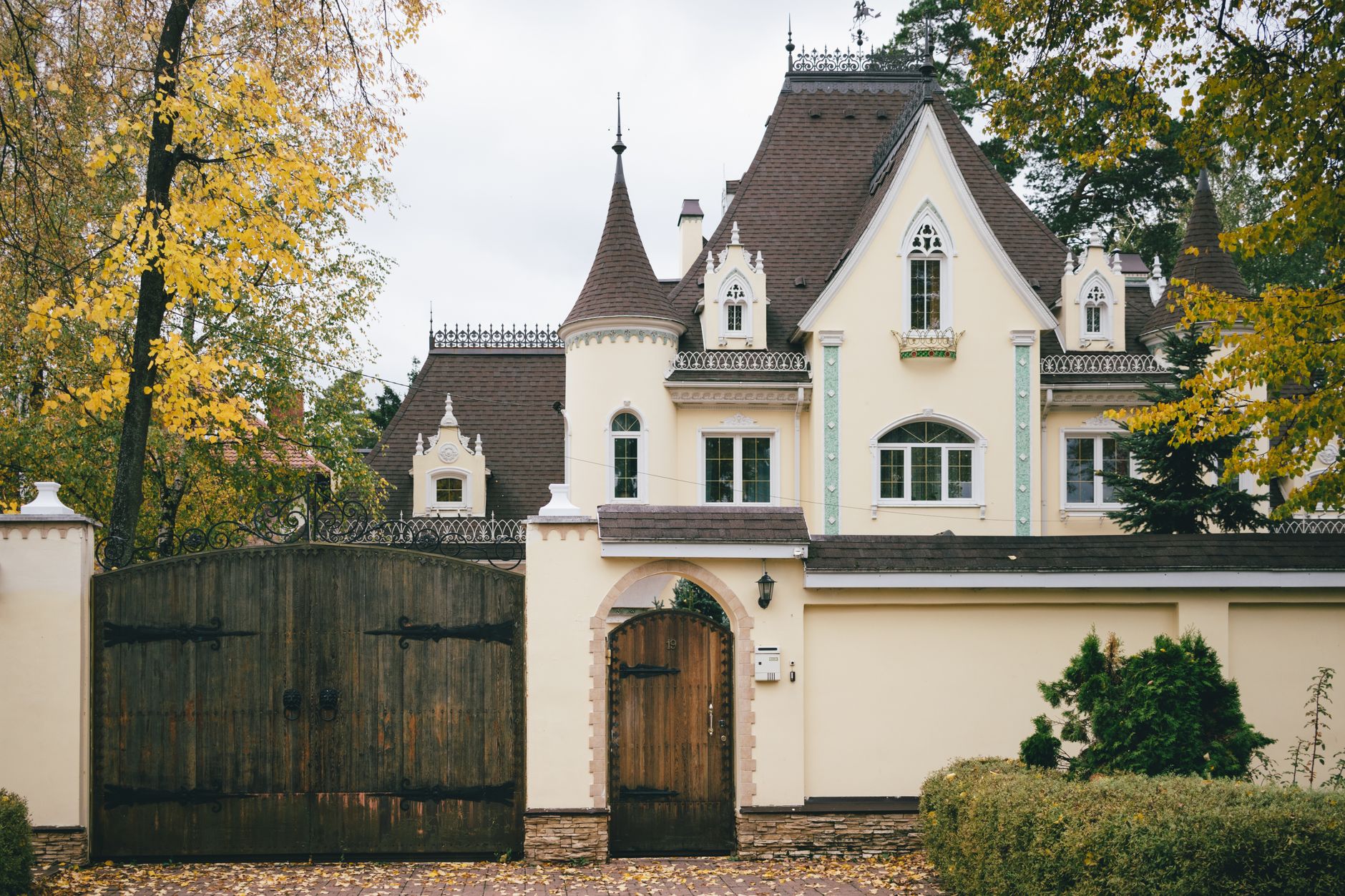
House behind wooden gates surrounded by autumn foliage

Living With a Driveway Gate in Austin: Common Questions

2026-10-06

A driveway gate changes small habits around a house. Deliveries, guests, trash day, a power cut in July and a rainy week all test it in ways a showroom sketch never does. The questions below come up again and again on Austin lots, from the older blocks of Hyde Park and Clarksville to the steeper streets near Mount Bonnell, and the answers come from how these gates behave once they are in daily use.

What happens to the gate when the power goes out?

Most operators have a release that lets someone move the gate by hand. On a swing gate it is usually a key lock or a lever on the arm, and on a slide gate it is a lever that disengages the chain or the drive wheel. A battery backup keeps the operator running through a short outage, and with a lightly used gate it can carry a household through a long evening without trouble. The backup does not last forever, so a gate that must open at night for an emergency vehicle needs a plan, such as a fire department key box or a keypad on a separate supply.

A gate on a steep drive is a special case. When a slide gate is released on a grade, it can roll on its own, and a heavy swing leaf can swing shut under its own weight. A crew that works on sloped lots near Tarrytown and Travis Heights usually adds a mechanical stop or a latch so a released gate stays where it was left.

How do deliveries and guests get through?

A keypad is the simplest answer. It lets a household give out a code and cancel it later without changing a remote. A call box adds a buzzer that rings a phone inside the house. A loop detector in the driveway can open the gate for a vehicle leaving, so nobody has to press anything on the way out. Each of these has a failure mode, and each gets more reliable when it is mounted out of direct sun and kept clean.

Delivery drivers in Austin tend to stop at whatever is closest to the street. A keypad pedestal set back far enough that a van can pull fully off the road keeps traffic flowing and keeps the driver from backing into the gate. The setback is measured when the gate is laid out, not after.

Is it normal for a gate to open and close slowly?

Slow movement is built in on purpose. An operator ramps up and ramps down, and the closing speed on a swing gate is limited by the safety rules for gates that move across a driveway. A gate that is slower than it was last year has a different problem. The usual causes are a dry hinge, a stiff wheel, a dirty track, a weak battery or a motor that is running warm because it is working too hard.

The test is simple. With the operator released, the gate should move by hand with little effort. If it fights back, the trouble is in the frame, the hinges or the track, and no amount of adjusting the operator will help. If the gate moves freely by hand but crawls under power, the operator or the power supply needs attention.

Why does the gate reverse or stop for no reason?

Reversal is the safety system doing its job, and sometimes doing it too eagerly. A photo eye that has drifted out of alignment will break its beam on a gust of wind. A sprinkler that sprays across the opening at six in the morning will do the same. Dust or a spider web across a lens can cause a stop, and a safety edge with a cracked cover can read contact that is not there.

A loop detector in the pavement can also misfire, especially where the ground moves with the clay. Cracks beside the Barton Springs area and along the Colorado River bluffs can pull a wire loop apart over a few seasons. The crew checks each sensor in turn, cleans the lenses, re-aims the eyes, and tests the edge by pressing it with a hand before assuming the board is bad.

How does a gate behave in a storm?

A gate with solid infill catches wind like a sail. A swing gate that was fine on a calm day can bang against its stop when a front blows through, and the operator takes that load on its arm. Open pickets let the wind through and put less strain on the hardware. A gate near Lady Bird Lake or on an exposed ridge in the Texas Hill Country needs a stop that can take the force and an operator that is sized for it.

Lightning is the other storm risk. A strike nearby can send a surge down the power wire or the control cable and burn out a board. Surge protection at the operator and a proper ground rod reduce the risk. After a heavy storm, a quick check of the keypad, the eyes and the battery will find a problem before it turns into a morning where the gate will not open.

What does a household actually need to maintain?

A gate needs less attention than a car and more than a fence. A few minutes each season keeps it running for years.

  • Wipe the photo eye lenses and the keypad face with a damp cloth.
  • Check that the hinges, rollers and track are free of grit, and add the lubricant the maker recommends.
  • Watch the gate through a full cycle and listen for scraping, clicking or a change in speed.
  • Press on the safety edge and walk through the beam of the eyes to confirm the gate stops or reverses.
  • Look at the battery backup and replace it when it is old, since a hot cabinet in Austin ages a battery quickly.
  • Keep plants, mulch and leaves back from the track, the sensors and the post bases.

Painted steel and powder coated frames hold up well with a rinse and a look for chips. A chip that exposes bare steel should be touched up before rust gets under the coating. Galvanized frames resist rust longer, and aluminum does not rust at all, though its fittings and fasteners can still corrode.

Can an old gate take a new operator?

Often it can. The frame has to be straight, the hinges or wheels have to be sound and the gate has to move freely by hand. Old gates on older lots in Hyde Park or Clarksville are frequently built better than the openers hung on them, and a new operator on a sound frame is a faster job than a rebuild. A gate that is bent, rusted through at the welds or too heavy for modern hinges is a different story, and the crew will say so after looking at the weld lines and the posts.

What should be checked before a gate is installed?

The checklist is short and mostly about the ground. The width of the opening, the grade along the drive, the room to swing or slide, the depth of rock below the posts and the route for power all shape the job. A lot with a creek edge near Bouldin Creek or a rise like the ones near Zilker Park will change the answer on style, footing and operator. Settling those points first avoids the repair work that comes from guessing.

Is a gate worth the trouble?

A gate does what a fence cannot: it controls the one opening that vehicles use. A well matched gate on a sound footing runs for years with a few minutes of care each season, while a mismatched one teaches its owner every failure mode.
Read more →

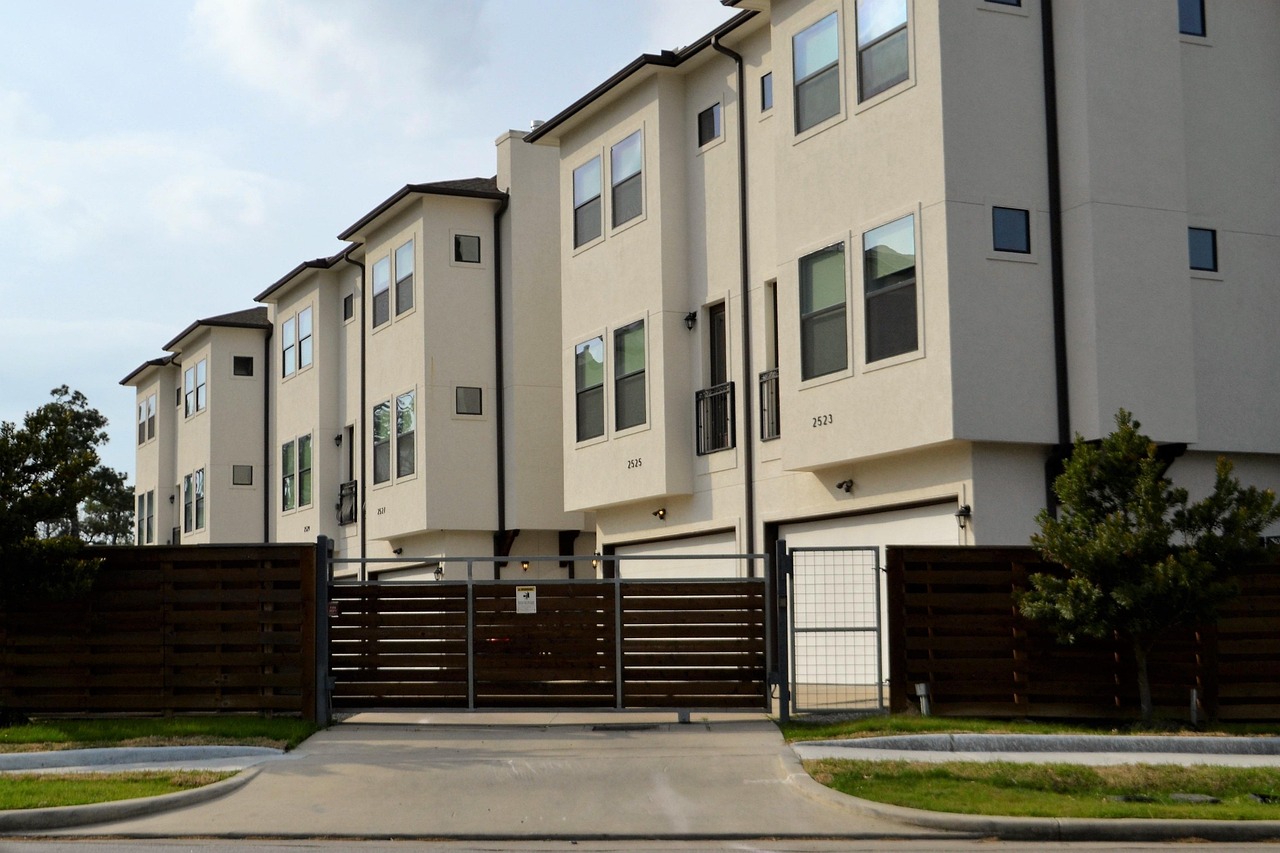
House front seen from the street

Steel, Aluminum or Wrought Iron for an Austin Driveway Gate

2026-10-06

Steel, aluminum and wrought iron all show up on Austin driveways, and each reacts differently to a summer that runs hot for months, to the occasional hard freeze and to the flash storms that roll across the Texas Hill Country. The choice affects how heavy the gate is, which operator it needs, how the coating holds up and what the maintenance looks like five years on. This is the comparison a fabricator walks through before a frame is cut.

How does the material change the weight of a gate?

Weight sets the operator, the hinges, the footings and the wear on every moving part. A steel tubing frame with solid pickets is the heavy end of the range. Aluminum of the same size weighs a fraction of that, which is why it suits long spans and operators with modest motors. Wrought iron, in the sense of hand forged bar and scroll work, falls in between and varies with how much ornament it carries.

On a sloped lot the weight matters twice. A heavy swing leaf lifts itself uphill and wants to run away downhill, and a heavy slide gate does the same along a grade. Lighter gates give the operator an easier day, and they can allow a smaller footing in rocky ground near the Balcones Fault where every extra inch of depth adds drilling time.

What does each material do in Austin heat and sun?

Dark paint on steel in direct sun gets hot enough to burn a bare hand by mid afternoon. That heat expands the frame slightly and bakes the paint, and it warms anything bolted to it, including an operator bracket and a keypad. Aluminum conducts heat quickly and also cools quickly. Light colors on any metal reflect more sun and reduce the thermal swing, and the choice of powder coat color has more to do with longevity than most people expect.

Wood or composite infill inside a metal frame brings its own movement. Wood swells with humidity and shrinks in August, and a gate that closed smoothly in April may rub in July. A frame with open pickets avoids the swelling problem and lets wind pass through.

How do the three compare side by side?

PropertySteel tubingAluminumWrought iron
WeightHeavyLightMedium to heavy
Rust behaviorRusts if the coating breaks, galvanizing slows itDoes not rust, can pit near salt or chemicalsRusts readily without paint
Strength for long spansVery goodGood with larger sectionsGood for short spans
Operator demandHighestLowestModerate to high
Weld repairEasy in the shop or on siteNeeds a skilled welderEasy, matching old work takes care
Typical finishPowder coat or paint over galvanizingPowder coatPaint or powder coat

No row in that table settles the question alone. A lot with a steep drive and a long gate will lean on the weight row. A lot beside Lady Bird Lake or a creek bed near Bouldin Creek, where the air stays damp, leans on the rust row.

What about rust, storms and moisture?

Rust is a coating problem more than a metal problem. Bare steel starts to rust within days of a scratch in humid weather, and a flash storm across the Colorado River brings plenty of moisture to a scratch. Hot dip galvanizing puts a zinc layer on the whole frame inside and out, which matters because the inside of a tube cannot be painted by hand. A powder coat over galvanizing gives two layers of defense, and the coating only has to be touched up where it chips.

Aluminum shrugs off ordinary moisture. The weak points are the fasteners and any steel hardware bolted to it, since two metals in contact with water can corrode where they meet. Stainless or coated fasteners and nylon washers help on a frame that will see damp air for years.

How do welds and joints hold up?

The weld is where a frame wins or loses its long term life. A good weld on a steel gate is continuous, ground smooth and sealed before coating, so water cannot sit in a crevice and start rust from the inside. A poor weld leaves pinholes and sharp edges that coating will not cover. On aluminum, a weld takes more skill because the metal conducts heat away quickly and can crack if the heat is wrong.

Bolted joints are common on aluminum kits and on gates assembled on site. They are fine when sized and tightened properly, and they need a check every year or so, since heat cycles loosen hardware. A gate that has to be moved, resized or repaired later is easier to deal with when its joints can be reached with a wrench.

Which suits a sloped Hill Country lot?

A steep drive with room beside the opening usually points to a slide or cantilever gate, and aluminum keeps the carriage load down. A narrow lot in Hyde Park or Clarksville with a short opening can take a wrought iron or steel swing pair without strain, and ornament fits an older house. A gate above Mount Bonnell, exposed to wind, does better with open pickets than a solid face, regardless of material.

The footing problem often settles the rest. Hard limestone near the Balcones Fault can take a smaller footing for a light gate, and the crew saves a day of drilling. Soft clay near Mueller wants a wider footing for a heavy one. The material and the ground have to be chosen together.

Does the finish matter as much as the metal?

For long life it often matters more. A properly prepared surface, cleaned and blasted, then primed or coated, holds for years. A rushed one flakes in the first summer. Powder coat is baked on and forms a harder shell than most brush paint, and it resists the sun better. Glossy finishes show scratches and chalk less than flat ones, and a satin black on a driveway gate in Austin, TX will outlast a cheap enamel by a wide margin.

Touch ups need the right product and a clean surface. A chip filled with whatever is in the garage will peel. A crew will keep a small supply of matched coating for a repair, and a yearly walk around the gate with a flashlight finds most problems while they are still small.

What about the parts that move?

Hinges, rollers, bearings and the track wear no matter what the frame is made of. Sealed bearings and stainless pins outlast plain steel ones. A track slide in a ground channel collects grit and storm runoff, while a cantilever gate on overhead rollers keeps the track off the ground. Grease or dry lubricant suits each part, and the maker of the hardware will say which.

The operator and its sensors share the frame, and their brackets need solid mounting points. Welded tabs on a steel frame make that simple, and on aluminum the crew uses reinforced plates so a bolt does not pull through thin wall tubing.

Which metal should a homeowner pick?

Pick the material that fits the span, the slope and the damp air at the lot, then spend the saved effort on a good weld and a good coating. A plain frame in the right metal outlasts an ornate frame in the wrong one.

Read more →